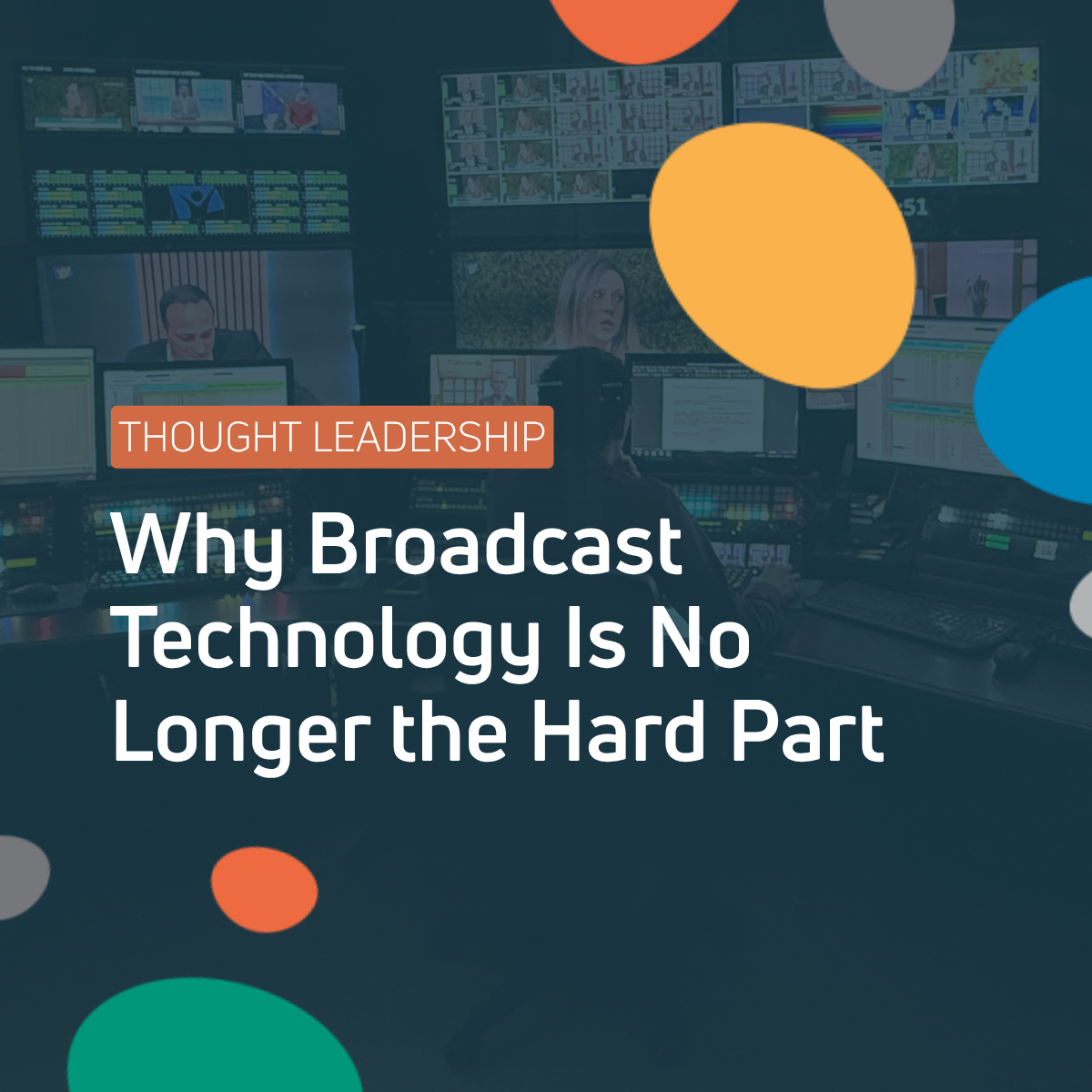

For most of broadcasting’s modern history, progress was defined by technical constraint.
Could systems stay on air without interruption? Could devices be synchronised precisely? Could storage, processing and networking cope with growing channel counts? For decades, competitive advantage came from overcoming engineering limitations. If you could make the technology work seamlessly, you were ahead.
Today, that is no longer the defining constraint.
Modern computing power is extraordinary. Virtualisation is mature. IP transport is proven. Automation platforms are sophisticated and resilient. Monitoring is richer than ever. From a technical perspective, the industry is remarkably capable.
And yet, across broadcasters, service providers, streamers and vendors alike, there is a shared sense that the environment has become more difficult, not less.
That tells us something important.
The hardest challenges facing our industry in 2026 are not technical. They are commercial, structural and cultural.
For broadcasters, the pressure is obvious. Advertising models are shifting. Rights costs continue to rise. Audiences are fragmented across platforms. Delivering seamless channels is no longer enough; the question is how to monetise them sustainably.
For streaming platforms, the realisation has been equally stark. Moving into premium live content exposes operational complexity that cannot be hidden behind user interfaces. Reliability expectations are broadcast grade, whether the business originated online or not.
Service providers and playout centres face their own tension. Customers demand flexibility, regionalisation and rapid deployment, but without proportional increases in cost. Scaling capability without scaling overhead has become a daily balancing act.
Even vendors are not immune. The pace of innovation is relentless, yet customers are more cautious. Investment cycles are longer. Procurement scrutiny is sharper. The consequences of failure, technical or commercial, are simply higher than they used to be.
There is also a persistent assumption across the industry that the next platform shift will unlock the next wave of revenue. Cloud, FAST, IP, streaming, virtualisation – each has been presented at some point as transformative.
In reality, technology enables opportunity. It does not guarantee commercial success.
Automation makes scale possible. IP makes distribution flexible. But none of these tools define strategy. They support it.
A pattern we see regularly across our customer base is that broadcasters are not struggling to make the technology work. The real challenge is aligning operational systems with changing commercial priorities, whether that means launching new services quickly, regionalising content, or managing costs more tightly.
At Pebble, we see this reflected in the long-term relationships we build with broadcasters, service providers and technology partners. In complex operational environments, trust, transparency and a shared understanding of workflows often matter as much as the technology itself.
The uncomfortable truth is that most organisations in our sector are not constrained by what their technology can do. They are constrained by clarity of direction, by structural complexity, and by the difficulty of aligning operational capability with commercial intent.
This is where leadership becomes decisive.
The organisations that will thrive are not those chasing every new technical development. They are those disciplined enough to decide what not to pursue. They will simplify where others complicate. They will align teams around clear outcomes rather than new features.
Partnership also becomes more significant in this environment. When markets are stable, supplier relationships can be transactional. When markets are volatile, long-term trust matters. Broadcasters, streamers, service providers and vendors all benefit from stability and transparency across the ecosystem.
Our industry has successfully solved many of the engineering problems that once defined it. Reliability, resilience and precision are now established disciplines.
The harder question facing all of us is not whether we can build it.
It is whether we can build businesses around it that remain viable in a far more competitive world.
Peter Mayhead, Pebble CEO
### ENDS ###