testttt

Why is Pebble getting involved in the IP connection management space?

InBroadcast – global broadcast industry monthly magazine | Article

Written by Cristian Recoseanu, Development Lead at Pebble

One of the consistent rules of our industry is that every broadcast engineer and content producer needs to connect equipment. Whether working in SDI or IP, signals need to be routed and switched around your setting, be that a production facility, a playout centre, a regional broadcast station, or an OB truck.

In the world of SDI there are lots of options to help you do this. But in IP environments connection and device management becomes a whole lot more complex. For every device joining your network, you need to set an IP address so it’s visible to the network, and then for each output on each device you need to allocate a multicast address and a multicast port for video, for audio, and for ancillary data.

In an IP environment, it’s also more difficult to lock and synchronise all these sources together. You can’t simply run a genlock cable and plug it in as you would in the SDI world — you will need to set all the PTP (precision time protocol) parameters for each device. You can, of course, do all of this manually for every client that joins the network, but this is cumbersome, time-consuming, and provides an increased likelihood of making errors. And given some broadcast environments where you only have a couple of buttons and a very small display on which to work, it can be extremely fiddly, challenging, and time-consuming…

Click HERE to read the article in full.
testttt

Pebble and Nevion announce an integration between recently launched Pebble Control and VideoIPath

Integration adds SDN control to Pebble Control

Weybridge, Surrey, UK  and Oslo, Norway, 17 June 2021: Pebble, the leading automation, content management, and integrated channel specialist, and Nevion, a Sony Group Company and award-winning provider of virtualised media production solutions, today announced a new integration between Pebble Control, Pebble’s IP connection management solution, and VideoIPath, Nevion’s orchestration and SDN (software defined network) control software.

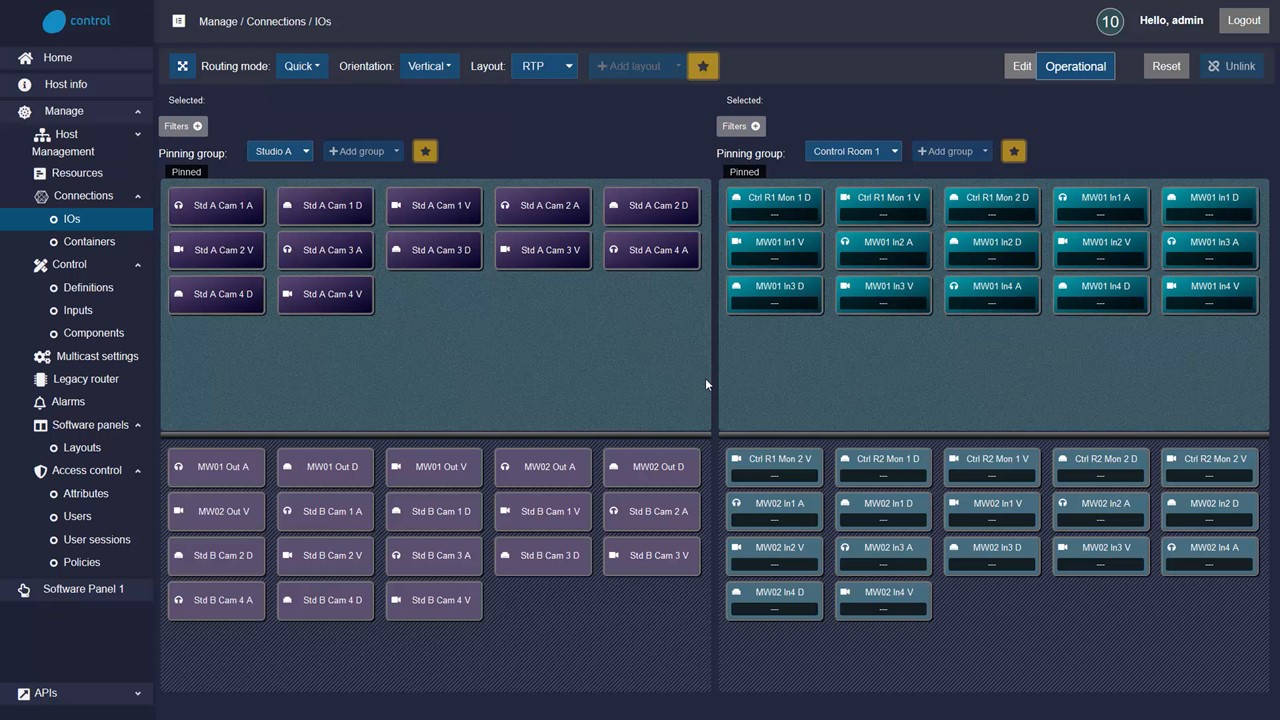
This integration enables Pebble Control customers to control SDNs, in addition to the traditional IGMP-based networks that could already be controlled by the solution. Pebble Control can discover devices in the VideoIPath system and issue connection requests based on the user input. Furthermore, VideoIPath customers can now benefit from Pebble Control’s advanced features, such as its container logic concept.

Pebble Control is a self-contained, scalable, and easy to configure IP connection management system built specifically to enable broadcasters to make the transition to an all-IP facility without the need to deploy a bespoke enterprise solution. Leveraging open standards, Pebble Control operates on web-based UIs and is designed to deliver immediate benefits to even the smallest IP facility. In its initial release, it interfaces with NMOS-enabled devices from multiple vendors on a network, providing plug and play capability for a straightforward yet powerful IP deployment.

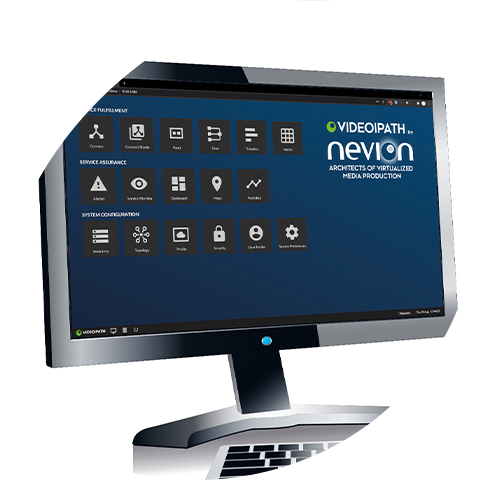
VideoIPath is a system that puts users in control of their connectivity needs by making it easy to route video, audio and data across local and wide area networks (LANs and WANs), connecting locations, equipment and functionality. It transforms of the logistics and economics of production workflows by enabling the sharing across geographical locations of real-estate (e.g. studios, control rooms, data-centers), equipment (e.g. processing), and most importantly, people.

Miroslav Jeras, Pebble’s CTO says: “IP networking is a complex area and can seem daunting to customers as they transition to a new technology. Our Pebble Control application offers broadcasters standards-based interoperability for IP broadcast facilities or workflows of all scales. We have architected the system around the concepts of ease of use, interoperability, and reliability. With the addition of VideoIPath integration, our customers can further expand their IP systems to more complex COTS network architectures. From small scale IP trials to full network rollouts, wherever our customers are on their IP journey, Pebble has solutions to fit.”

Johnny Dolvik, Nevion’s Chief Product and Development Officer adds: “VideoIPath has established itself as the leader in convergent orchestration and SDN control across LANs and WANs, handling both IP and SDI networks. We are pleased that Pebble recognises the importance of VideoIPath and believe that this new integration will provide real added value to customers.”           

### ENDS ###

testttt

Sustainability Focus: A paradigm shift for vendors

IBC 365 Article

Written by Michael Burns with contribution from Director of Sales & Marketing at Pebble – Alison Pavitt

How are vendors and manufacturers making sure their products and services support broadcasters, platforms and content creators in their efforts to make broadcast and film a more sustainable operation? Michael Burns finds those who serve the media industry are ready for climate action.

How are vendors and manufacturers making sure their products and services support broadcasters, platforms and content creators in their efforts to make broadcast and film a more sustainable operation? Michael Burns finds those who serve the media industry are ready for climate action.

“Being green in the movies is no longer something reserved for The Hulk. It is a responsibility for every one of us in the industry,” says Bill Admans, SVP Operations at Ownzones.

“Environmental sustainability is an essential cultural pillar for many of our customers. They expect their vendors and suppliers to… 

Click HERE to read the article in full.

testttt

The new role of automation in broadcasting

Column | Newscast Studio – US trade publication for broadcast production

Written by David Kicks, VP of Sales for The Americas at Pebble.

Listen up, class. There was a time when runners – actual people – would physically carry a tape from the local production house to the broadcast studio just to ensure a commercial played at the scheduled time and kept the advertisers happy.

That sounds like a ready-made seminar lecture in Broadcast 101, but it’s a lesson worth learning. To understand the future, and the importance, of broadcast automation we first have to appreciate its history….

Click HERE to read the article in full.