testttt

Building better broadcast connections 

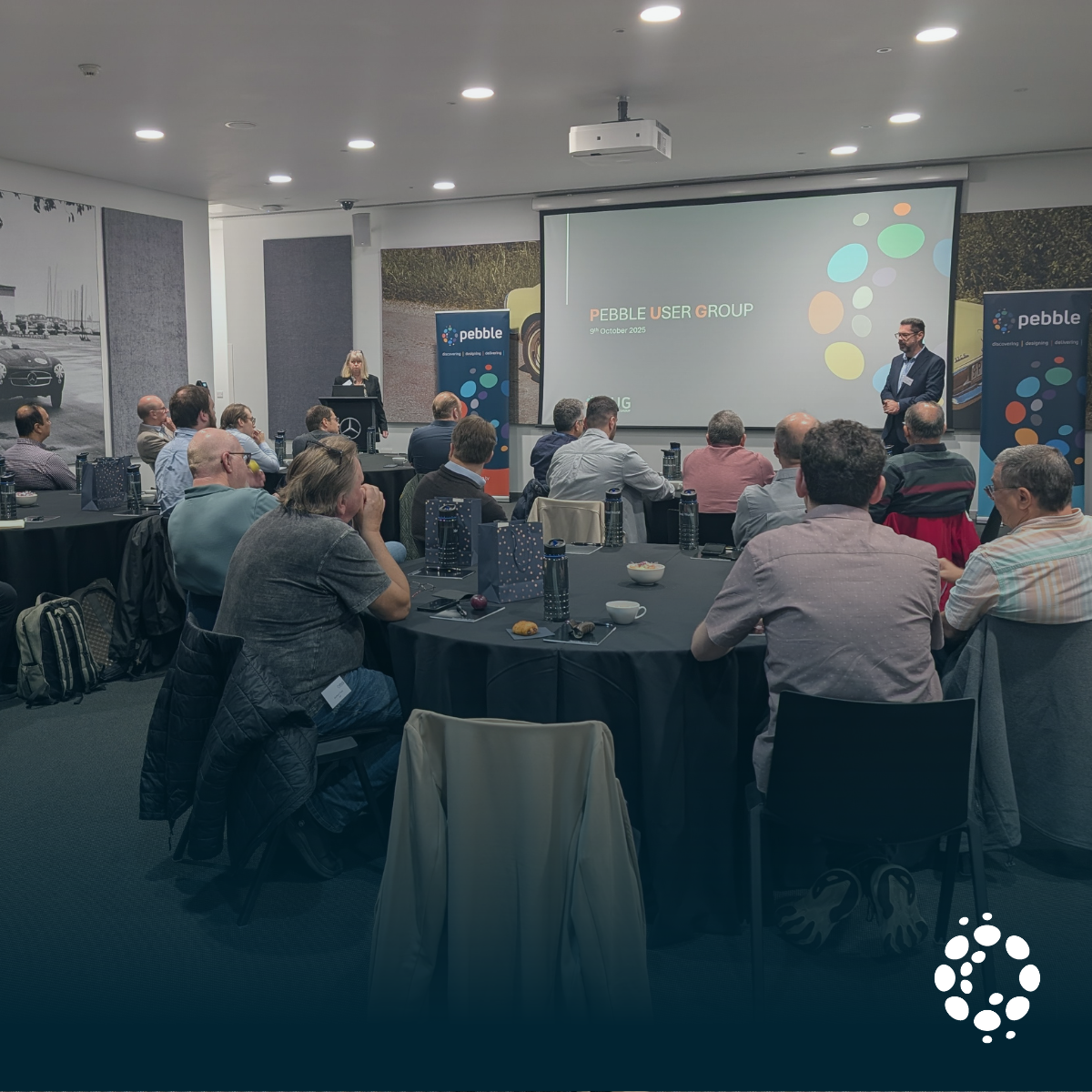
At this year’s Pebble User Group in London, customers came together to talk openly about what is happening inside their playout operations today. The discussions ranged from SDI to ST 2110 transitions to keeping systems steady during organisational change and shaping what automation needs to deliver in 2025. More than anything, the event reinforced a simple truth. The strongest solutions come from listening to the people who rely on them every day. 

Listening to our customers

Playout and automation sit at the heart of broadcast operations. Reliability, flexibility and efficiency are non-negotiable, yet every broadcaster approaches them differently. Workflows, scale, business pressures and technology strategies all vary, which is why the conversations at PUG matter so much. 

Users shared how Pebble Automation gives them the control they need across mixed environments, how Pebble Remote supports new hybrid operating models, and how Integrated Channel fits into changing delivery requirements. These insights directly influence how we prioritise development. Customer input shapes more than features. It shapes how we think about the future of playout and the real world challenges our technology must meet. 

A sense of community 

Although remote tools keep the industry connected, nothing replaces face to face discussion. For many attendees, PUG is one of the few moments each year to speak openly with people who understand the realities of broadcast operations. 

That sense of community is clear throughout the day. Users compare notes on workflows, share practical tips and explore how others are adapting to IP, cloud or hybrid infrastructure. In a sector often shaped by competitive pressures, seeing such open collaboration is refreshing. Our team leaves inspired by the expertise in the room, and attendees tell us how valuable it is to hear from peers facing similar decisions. 

Shaping the road ahead

The agenda encouraged honest discussion about technology priorities. This year highlighted a broad spectrum of approaches. Some teams remain primarily SDI based. Others are further along with ST 2110 or moving into hybrid environments. What they all shared was the need for solutions that support this variety without compromising the reliability expected of mission critical systems. 

Attendees spoke about how important it is to manage legacy and IP based channels within a single interface. Several also stressed that while new features matter, the stability and predictability of updates matter just as much. Knowing the automation platform will behave as expected gives teams confidence, particularly when responsible for live output. 

The roadmap session was another highlight. Users appreciated seeing what is coming next, but also understanding the reasoning behind those decisions. That visibility helps them plan their own transitions and align internal strategies with Pebble’s future direction. 

UHD surfaced as a topic of interest, though most agreed it remains a future consideration rather than an immediate priority. For now, teams are watching market signals and preparing for adoption once business cases strengthen. 

Strengthening relationships 

At its core, PUG is about relationships. Many customers have worked with Pebble for years, even decades. The event provides the time and space to strengthen those partnerships. Face to face conversation builds understanding in a way that email and calls simply cannot. It allows for nuance, problem solving and clarity. 

For our team, it is a reminder that although we build technology, what we deliver is trust. Customers need to know that when they go to air, Pebble’s systems will support them. The better we understand their goals and pressures, the better our solutions become. 

Learning together

Broadcast technology continues to shift quickly. New delivery models, changing audience habits and evolving infrastructure all present new challenges. PUG gives us the opportunity to pause, reflect and ensure our roadmap stays aligned with what customers actually need. 

Every year, we leave with new ideas and a deeper understanding of the operational realities our users face. That collaboration is what drives meaningful innovation. 

Looking ahead

Technology alone is not what sets Pebble apart. It is the relationships, the shared commitment to quality and the ongoing conversations that shape our direction. The insights gained in London will continue to influence the next generation of Pebble solutions, from user interface improvements to new integrations and deployment approaches. 

In a fast-moving industry, one thing remains constant. Listening, learning and collaborating will always be the most powerful drivers of progress. PUG is where that happens. 

### ENDS ###

testttt

Pebble future-proofs playout at Canal Sur

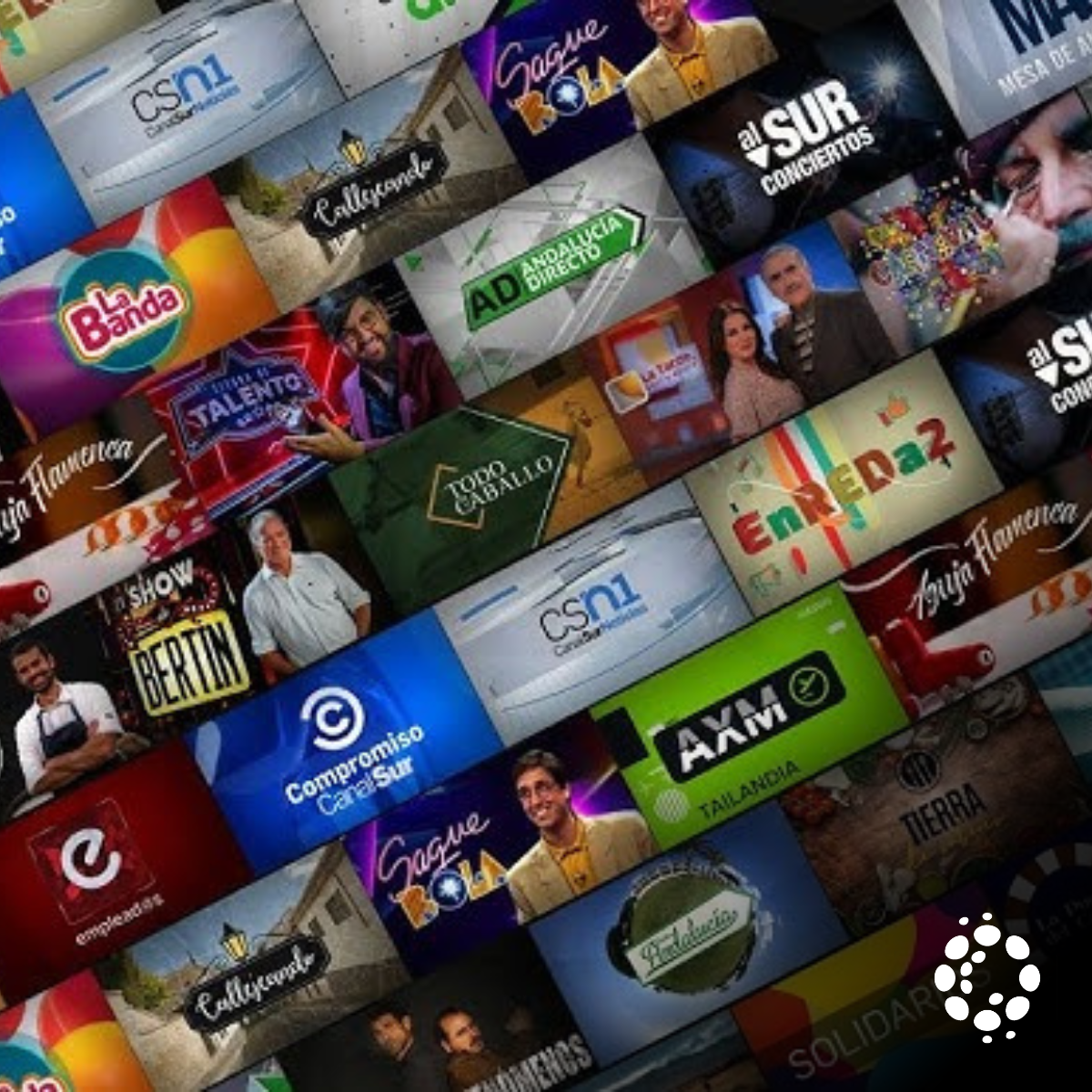
Epsom, Surrey, UK, 17 December 2025: Pebble, the leading automation, content management and integrated channel specialist, has provided a complete update of its installation at Canal Sur in Spain. The new system, based on highly resilient, software-defined Pebble Integrated Channel engines, replaces an existing best-of-breed Pebble automation system in place since 2011.

Canal Sur is the public broadcasting organisation for Andalucía in the south of Spain, with its headquarters in Seville. Today it is responsible for delivery, across multiple platforms, of a portfolio of regional channels, together with managing local opt-outs based on seven cities in the community.

With its existing Pebble playout automation platform nearing the end of life for both software and hardware, the team at Canal Sur took the opportunity to take a fresh look at the station’s requirements. Working with Pebble’s partner in Spain, systems integrator Datos Media, they defined the requirements that would sustain the broadcaster into the future.

They selected an architecture based on Pebble Integrated Channel playout engines. Integrated Channel is highly resilient by design, and supports multiple outputs per device, allowing Canal Sur to build a highly performant system in a compact footprint.

Playout and asset management is orchestrated by the latest version of Pebble’s proven Automation software. This also manages ingest, automated quality control file transfers and graphics. It also handles outputs to new media platforms, like Movistar and YouTube.

“The nature of broadcast has changed completely since we first installed Pebble automation, 14 years ago,” said Pedro Espina, CTO, Canal Sur. “We wanted to build much greater operational flexibility now and into the future, to cover multiple channels and regional opt-outs, and of course we expect absolute reliability.

“Our close relationship with Pebble over an extended period gave us a great deal of confidence, and they were able to demonstrate to us how they could meet all our expectations in a compact and efficient implementation.”

Jorge Pérez, Sales Manager, Datos Media, added “A critical part of the project was managing the transformation. We had to ensure seamless integration with other systems at Canal Sur, like traffic, asset management and scheduling. We also had to ensure that staff understood and could access the new capabilities, while retaining the familiar parts of the Pebble user interface to eliminate any risks.”

Peter Mayhead, CEO, Pebble, said “This is a great illustration of the importance of strong relationships between vendor and user. Canal Sur has relied on mission-critical Pebble technology for well over a decade, and in that time each party has learnt from the other, meaning a real, deep understanding of the requirements when it came time for a refresh.

“We are delighted to implement this new system at Canal Sur, and we look forward to many more years of trouble-free broadcasting and open and engaging conversations,” he said.

For more information on Pebble automation systems, see pebble.tv.

### ENDS ###

testttt

Pebble to automate CobbTV

Epsom, Surrey, UK, 16 October 2025: Pebble, the leading automation, content management and integrated channel specialist, has won a contract to provide Cobb County, Georgia, with an automated playout system. The contract was negotiated in co-operation with, and was installed by, Pebble’s systems integration partner CTI.

CobbTV is a government-access television channel for Cobb County, available on Comcast cable and ATSC terrestrial. As well as county commission and other local government meetings, the programming includes educational and informational programming and, in rush hour, live traffic information including highway cameras.

The county authorities sought an easy to use, highly reliable automated playout platform, which would involve very low operational and maintenance overhead. Following a procurement exercise, the contract was awarded to CTI and Pebble.

“To meet CobbTV’s particular needs, we proposed a very simple configuration,” said Eric Paris, Project Manager for CTI. “It uses a single Pebble Integrated Channel device which is capable of supporting four concurrent channels. Under the control of Pebble Automation software it provides links to Cobb’s NAS media storage, and manages live inputs and recordings.”

Video inputs and outputs are SDI, with the capability of 12G-SDI for a future move to Ultra HD. As well as switching and routing, the Pebble platform also generates and inserts rich graphics. It also includes audio channel management and mixing.

“We are a government body with needs slightly different than a traditional broadcaster, so our chief goal was to identify a trusted partner who would give us the reliability we sought,” said Brad Plumley, Station Manager at CobbTV. “Pebble is internationally recognised as a leader in broadcast automation, yet also took the time to understand our specific requirements.

“The solution they proposed is compact and cost-effective, but comes with the Pebble reputation for reliability,” he added. “It is packaged in a single box which reduces system complexity, and they have implemented against our timeline requirements.”

CTI installed, integrated and commissioned the Pebble system in July 2025 for an on-air date in August.

For Pebble, CEO Peter Mayhead said “This project is an important pointer of the way the media industry is transforming. Once the province of monolithic broadcasters, video is now seen as the route for direct communications by businesses, sports clubs and – as seen here in Cobb County – by public sector bodies who want to ensure their citizens are properly informed.

“We designed our technology to be scalable, not just in number of channels but in the level of operational involvement,” Mayhead continued. “That means for non-broadcasters like CobbTV we can provide the highest technical and operational quality and reliability with minimal operator or engineer involvement.”

For more information on Pebble automation systems, see pebble.tv.

### ENDS ###

testttt

Pebble modernises playout at France 3 Corse

Epsom, Surrey, UK, 3 September 2025: Pebble, the leading automation, content management and integrated channel specialist, has implemented a new two channel playout system for France 3 Corse, the France Télévisions station on the island of Corsica. This is a proven platform for France Télévisions, already installed in Martinique and St Pierre and Miquelon, with a contract once again won in open tender.

France 3 Corse had a life-expired playout system in its headquarters in Ajaccio and went out to the market to find a modern, compact and efficient solution. Pebble was able to demonstrate the commercial and technical superiority of its playout in a box solution, which brings together in a single server the proven and popular Pebble Automation with the Pebble Integrated Channel playout engine.

The station transmits two channels, France 3 Corse and Via Stella. To provide complete resilience, the Pebble installation replicates the media database, automation and video servers over two physical devices. The playout and management software supports existing workflows while adding valuable new functionality.

Pebble demonstrated the complete functionality of the proposal, including the compact yet comprehensive redundancy, during the tender process. The company has local, French-speaking design and support teams, which provided further reassurance to France 3 Corse.

Manuel Brouard, Solutions Architect Manager at Pebble said “This is a great example of the way that local knowledge and market understanding helps reach a great solution. With French-speaking staff able to really dig deep into the requirements, we could give them a precisely tailored solution that delivers for France 3 Corse, now and in the future.

“That local knowledge and culture also meant that we could go from contract to on air, including workflow development and training, in just two months, a remarkable achievement,” Brouard said.

For more information on Pebble automation systems, see pebble.tv

### ENDS ###

testttt

The R&D and product development landscape 2025: Pebble

Miroslav Jeras, CTO at Pebble, believes the Dynamic Media Facility (DMF) reference architecture and the Media eXchange Layer (MXL) are the areas which R&D needs to be laser-focused on in the coming years

What impact have the current global uncertainties had on Pebble’s R&D and product development in recent months?

Since the dark days of 2020, Pebble has been a completely remote company. Our staff, including our development teams, can be located anywhere. Equally, our customer base is also global: our successful installations can be found around the world.

This gives us a large degree of isolation from perturbations in specific geographies and markets. Our agility means we can quickly shift to address opportunities and avoid challenges.

More widely, the disruption of international trade has caused everyone to look carefully at how their businesses are structured. In our industry, what advertisers decide has a big impact on broadcasters, who in turn will either pause or, better, advance plans for technology, seeking the right platform to help them manage increasingly unpredictable complexity.

What do you foresee as the biggest challenges in R&D and product development/deployment in the coming years? 

Our business is software. We are continually evaluating the latest in software design techniques and functionality to best support our products. Our customers choose Pebble because we have a long-established reputation for reliability, so we only adopt new ideas and new ways of working when we are absolutely certain they meet our high standards of resilience.

One key issue that affects the media industry is the need for standards in interconnectivity. In the rush to software-defined technology, the temptation was for each vendor to push ahead with an architecture that best suited their specific needs. Our role in providing automation and orchestration often involves integrating signal and control flows across the products of multiple vendors, which potentially means providing the bridge between different control layers and operating systems.

It has become clear that interoperability through open standards in the area of control results in the ability to deliver reliable and feature-rich solutions even when working on large-scale systems with multiple vendors and platforms. The AMWA NMOS suite of specifications have, over the years, enabled discovery of media nodes (IS-04), establishing stream connections (IS-05) and more recently the ability to control various processing functions and monitor relevant status parameters that indicate health issues impacting workflows (IS-12 and BCP-008).

As industry bodies continue to lay out their vision for the future of software-defined media, initiatives like the Dynamic Media Facility (DMF) reference architecture and the Media eXchange Layer (MXL) aim to guide the industry by fencing off areas which are in immediate need of interoperability. These are the areas which R&D needs to be laser-focused on in the coming years by engaging with the initiatives, actively contributing, or even leading them.

Where do you see the most opportune areas for innovation in your area of the market?

Broadcast automation systems were originally created–even before we entered the market 25 years ago–to simplify and secure playout operations. Everyone recognised that the principal driver was to ensure accuracy in playout, gain a commercial edge through the ability to add or change commercials late, and to control operational costs and redeploy staff to more creative, fulfilling roles.

Broadcasters and media enterprises now need much more. They need support to make smarter decisions and to do so more quickly. Live content, and particularly sport, remains the killer app for broadcast, and delivering the best experience for audiences while maximising revenues opens new opportunities and brings new challenges.

Agility is a word used perhaps too often these days, but broadcasters are looking for more than just management of complexity; but actively driving innovation in unpredictable environments.

What are you working on that excites you as a product team, and what can we expect to see at IBC2025?

Our development programme is dependent on a dialogue between the product team and our users worldwide. It must be a genuine dialogue to combine today’s demands with the potential of new technology. Remember the quote (probably incorrectly) attributed to Henry Ford: “If I gave my customers what they asked for, it would be a faster horse”.

What can you expect to see at IBC? Of course, I’m going to say it will be really interesting but you’ll have to be in Amsterdam in September to find out the details.

This article was originally published in TVBEurope.

### ENDS ###